Brass vs. Stainless Steel Jewelry: What Works for Each Part?
Would the same pendant work better in brass or 316L stainless steel? Compare the embossed detail, jump-ring fit, and gold-tone finish before approving an assembled sample.
Would the same pendant work better in brass or 316L stainless steel? Compare the embossed detail, jump-ring fit, and gold-tone finish before approving an assembled sample.
For a thin, embossed pendant, formable brass strip is a good starting point. When corrosion resistance matters more for a chain, connector, or clasp, 316L stainless steel is worth considering. The parts of a necklace can use different metals. For a gold-tone design, decide on the base metals and finishes separately, then see how they look together on an assembled sample.
| What to compare | Brass | 316L stainless steel |
|---|---|---|
| Natural color | Usually warm yellow. The exact shade varies by grade. | Usually silvery gray. A gold-tone design needs a surface finish. |
| Forming and uses | Cold-formable grades work for stamped pendants, decorative pieces, and similar parts. | Can also be formed. For embossed or bent parts, sample the actual material and forming process. |
| Finish and wear | Exposed brass can darken. Wear through a coating can expose brass that may then change color. | The base metal resists corrosion well. On a gold-tone part, check how the finish looks after wear. |
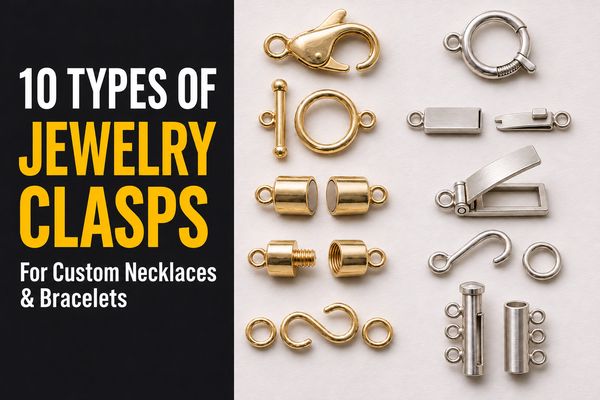
Take a stamped pendant with an embossed pattern. C26000 brass works well for cold forming. To try the same design in 316L, start with the original drawing and review the tooling against the actual sheet thickness, material condition, and forming steps. Once both samples are polished, set them side by side and look at the fine details. If the pattern looks shallower on one, check the embossing depth and how much material polishing removed. Then fit the same jump ring to both pendants. It should pass through the hole and turn freely. The jewelry clasp guide covers how rings and chain ends fit together.
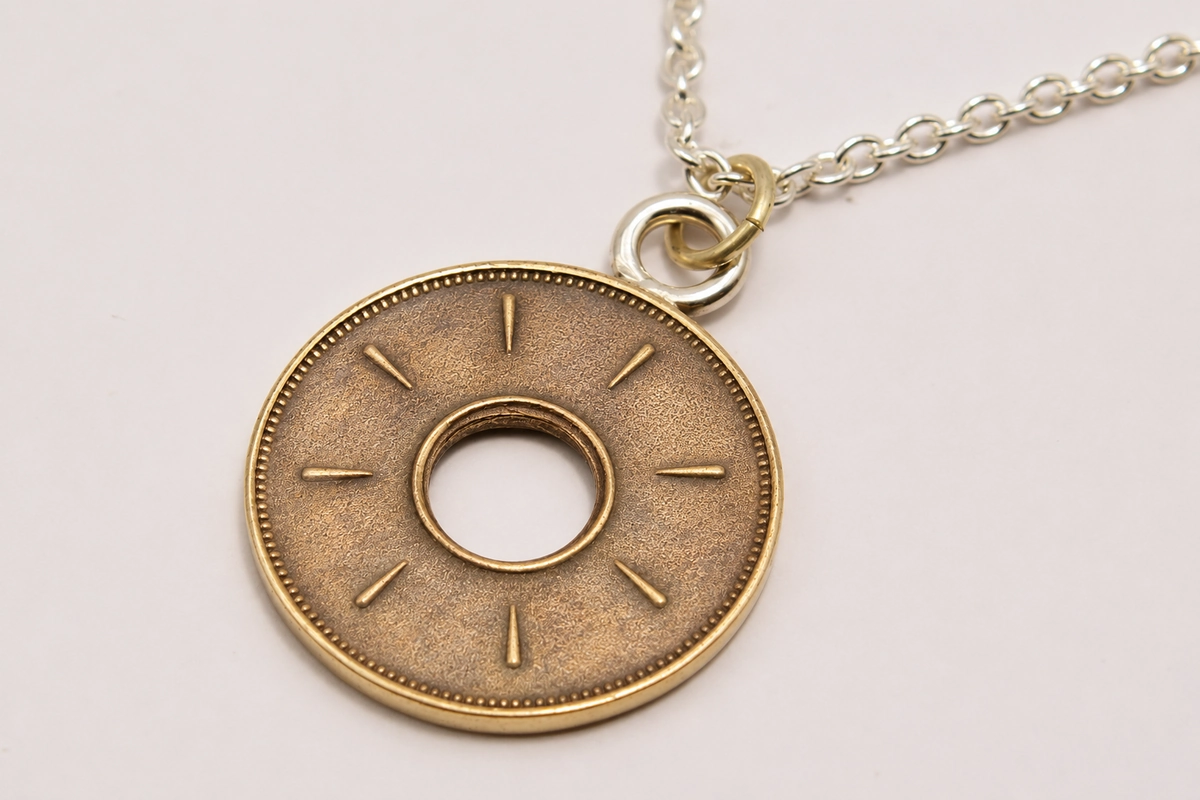
Fit both pendants to the same style of chain and clasp, then compare the two necklaces under the same light. The coating material, surface preparation, and polish can all affect the shade of gold. If the finishes differ between the two samples, compare the necklaces as complete designs. A difference in color or wear is hard to attribute to the base metal alone. Turn each pendant over and look at the inside edge of the hole where it rubs against the jump ring. Switching to 316L changes the metal you see if the finish wears through. How the gold-tone surface holds up still depends on the finish itself. For more on the process, see PVD coating for custom jewelry.
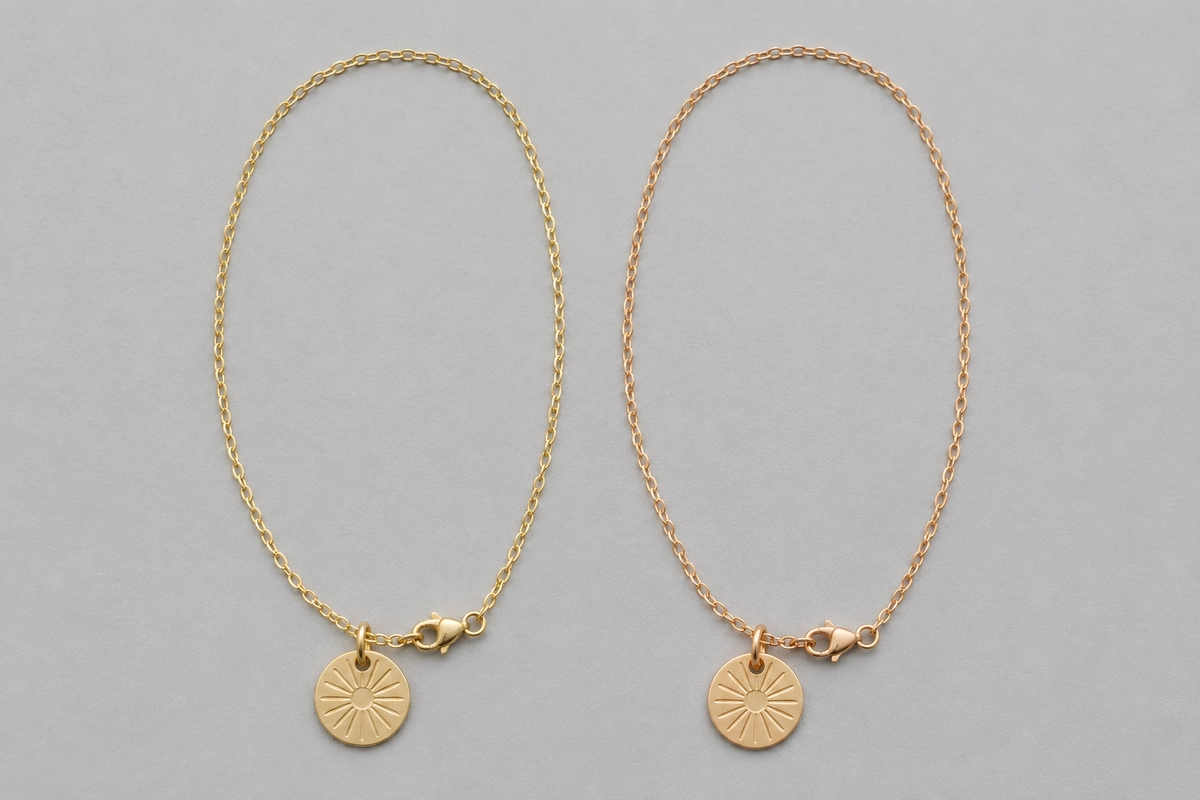
If the brass pendant retains the fine detail, matches the rest of the necklace, and looks as expected at the edges and contact points, there is a good case for keeping it. A switch to 316L is worth making if the sample keeps the pattern and fit and shows a visible improvement under conditions that matter for the design. For a necklace meant to be worn often, compare the two samples under conditions that reflect how it will actually be worn.
For quotes, use the same design, quantity, and finish target so you can see whether the difference comes from tooling, material, fabrication, or finishing. At sample approval, keep an assembled necklace as the reference for color and gloss. Record each component’s grade, material condition, key dimensions, and finish so you can check them if the material changes or you reorder.
Sample approval is also a good time to check the rules for the destination market. In the EU, individual jewelry components may be subject to lead content limits, and parts in direct and prolonged contact with skin can be subject to nickel release limits. The material grade is a starting point. Compliance depends on composition records for the relevant batches and any applicable testing of the finished parts.
If you’re weighing brass against 316L for a jewelry project, send us a quote request with a drawing or reference photo, the expected quantity, and the finish you’re after. If you already have a sample, tell us what you’d like to keep and what you’d change so we can review both options against the same requirements.
Wieland | C26000 Brass Strip and Cold Forming
Outokumpu | Supra 316L/4404 Stainless Steel
Canadian Conservation Institute | Surface Discoloration and Corrosion of Copper Alloys
Official Journal of the European Union | Lead Restrictions in Jewelry
Swedish Chemicals Agency | Dangerous Metals in Jewellery
These areas see more rubbing. When the coating wears through, the exposed brass can darken. Residue can also change how the surface looks in spots. Compare where the discoloration appears and how far it extends with a retained sample from the same batch, and consider how the piece was worn.
Look for grade documentation that can be traced to the component and its batch. If the chain and clasp come from different suppliers, check each one separately. Parts that look the same can have different material records.

Share your drawing. Let’s discuss how to make your part.
From prototypes to production.
Get Started Today
Upload your drawings and specifications. Our engineers will review and respond with an engineering review within 24 hours. All inquiries are treated with strict confidentiality.
We use cookies to collect information about how you use this website. We use this information to optimize website functionality and improve our services. Privacy Policy